Accessible therapy & counselling services in the UK
Accessible therapy & counselling services in the UK
Accessible therapy & counselling services in the UK
Therapy is a safe and confidential space to talk about your thoughts, feelings, and experiences. It helps you understand yourself better and find healthier ways to manage life’s challenges. Whether you are dealing with stress, anxiety, low mood, or relationship issues, therapy gives you a space to make sense of things and move forward.
At Towards, we believe therapy is not only for times of crisis. It can also help you grow, strengthen your relationships, and build emotional resilience. Our approach is built on evidence-based methods, compassionate care, and a deep understanding of what works for people at different stages of life.
Therapy is a safe and confidential space to talk about your thoughts, feelings, and experiences. It helps you understand yourself better and find healthier ways to manage life’s challenges. Whether you are dealing with stress, anxiety, low mood, or relationship issues, therapy gives you a space to make sense of things and move forward.
At Towards, we believe therapy is not only for times of crisis. It can also help you grow, strengthen your relationships, and build emotional resilience. Our approach is built on evidence-based methods, compassionate care, and a deep understanding of what works for people at different stages of life.
Therapy is a safe and confidential space to talk about your thoughts, feelings, and experiences. It helps you understand yourself better and find healthier ways to manage life’s challenges. Whether you are dealing with stress, anxiety, low mood, or relationship issues, therapy gives you a space to make sense of things and move forward.
At Towards, we believe therapy is not only for times of crisis. It can also help you grow, strengthen your relationships, and build emotional resilience. Our approach is built on evidence-based methods, compassionate care, and a deep understanding of what works for people at different stages of life.
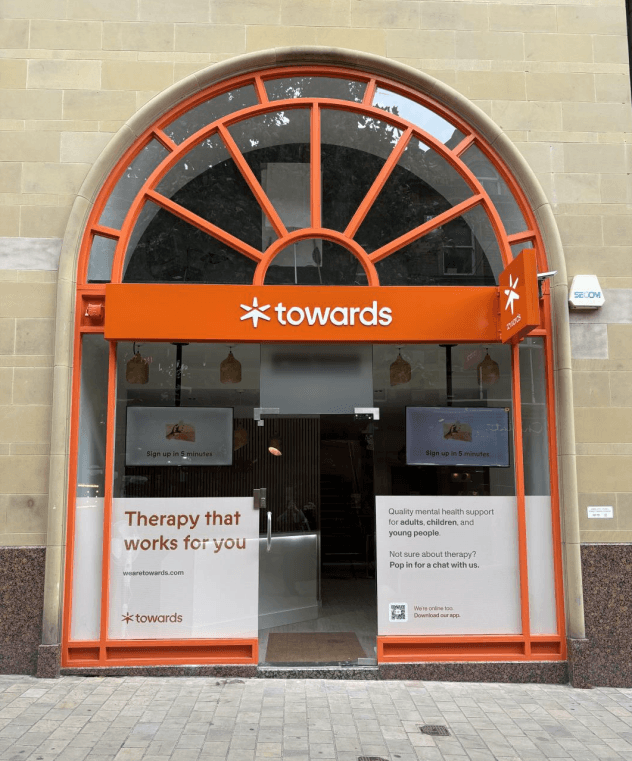
What makes our therapy approach different from other therapy services in the UK
What makes our therapy approach different from other therapy services in the UK
Not all therapists are the same. Research shows that only a third of qualified therapists consistently achieve excellent results. That is why we are selective about who joins our team.
Every therapist at Towards follows evidence-based frameworks recognized by NICE guidelines. However, we go a step further.
We personalise therapy for every individual, rather than applying a one-size-fits-all model.
Our Chief Clinical Officer, Dr Sarah Bateup, oversees all clinical standards, ensuring that every therapist delivers high-quality, ethical, and effective care. You can feel confident that when you start therapy with Towards, you are working with a therapist who is not only qualified but also exceptional at what they do.
Not all therapists are the same. Research shows that only a third of qualified therapists consistently achieve excellent results. That is why we are selective about who joins our team.
Every therapist at Towards follows evidence-based frameworks recognized by NICE guidelines. However, we go a step further.
We personalise therapy for every individual, rather than applying a one-size-fits-all model.
Our Chief Clinical Officer, Dr Sarah Bateup, oversees all clinical standards, ensuring that every therapist delivers high-quality, ethical, and effective care. You can feel confident that when you start therapy with Towards, you are working with a therapist who is not only qualified but also exceptional at what they do.
Not all therapists are the same. Research shows that only a third of qualified therapists consistently achieve excellent results. That is why we are selective about who joins our team.
Every therapist at Towards follows evidence-based frameworks recognized by NICE guidelines. However, we go a step further.
We personalise therapy for every individual, rather than applying a one-size-fits-all model.
Our Chief Clinical Officer, Dr Sarah Bateup, oversees all clinical standards, ensuring that every therapist delivers high-quality, ethical, and effective care. You can feel confident that when you start therapy with Towards, you are working with a therapist who is not only qualified but also exceptional at what they do.
How our therapy works
How our therapy works
Therapy begins with a simple conversation. In your first session, you and your therapist will talk about what brings you here, what you’d like to achieve, and how you’ve been feeling.
From there, you’ll agree on a structure that suits your needs. Sessions can be weekly or fortnightly, in person or online. Each therapy session lasts around 50 minutes.
The goal is to help you build insight, develop new coping strategies, and make meaningful changes. You can expect your therapist to listen without judgment, ask questions that deepen understanding, and work collaboratively with you to reach your goals.
Therapy begins with a simple conversation. In your first session, you and your therapist will talk about what brings you here, what you’d like to achieve, and how you’ve been feeling.
From there, you’ll agree on a structure that suits your needs. Sessions can be weekly or fortnightly, in person or online. Each therapy session lasts around 50 minutes.
The goal is to help you build insight, develop new coping strategies, and make meaningful changes. You can expect your therapist to listen without judgment, ask questions that deepen understanding, and work collaboratively with you to reach your goals.
Therapy begins with a simple conversation. In your first session, you and your therapist will talk about what brings you here, what you’d like to achieve, and how you’ve been feeling.
From there, you’ll agree on a structure that suits your needs. Sessions can be weekly or fortnightly, in person or online. Each therapy session lasts around 50 minutes.
The goal is to help you build insight, develop new coping strategies, and make meaningful changes. You can expect your therapist to listen without judgment, ask questions that deepen understanding, and work collaboratively with you to reach your goals.
Types of therapy and counselling services we offer
Cognitive behavioral therapy (CBT)
CBT focuses on the link between your thoughts, feelings, and actions. It helps you spot unhelpful thinking patterns and replace them with more balanced ones.
CBT is a practical therapy that often includes exercises between sessions. It can help with depression, anxiety, OCD, PTSD, and phobias.
You and your counselling therapist will set small goals to build confidence and progress over time. CBT sessions can be one-to-one, online, or part of guided self-help programmes.
Cognitive behavioral therapy (CBT)
CBT focuses on the link between your thoughts, feelings, and actions. It helps you spot unhelpful thinking patterns and replace them with more balanced ones.
CBT is a practical therapy that often includes exercises between sessions. It can help with depression, anxiety, OCD, PTSD, and phobias.
You and your counselling therapist will set small goals to build confidence and progress over time. CBT sessions can be one-to-one, online, or part of guided self-help programmes.
Acceptance and commitment therapy (ACT)
ACT is a form of mental health counselling where the therapist helps you face difficult thoughts and emotions rather than avoiding them. It teaches acceptance, mindfulness, and values-based action, helping you build a meaningful life even in the presence of pain.
ACT is used for all common mental health problems and long-term health conditions. It’s especially effective for anxiety, depression, chronic pain, and stress.
Acceptance and commitment therapy (ACT)
ACT is a form of mental health counselling where the therapist helps you face difficult thoughts and emotions rather than avoiding them. It teaches acceptance, mindfulness, and values-based action, helping you build a meaningful life even in the presence of pain.
ACT is used for all common mental health problems and long-term health conditions. It’s especially effective for anxiety, depression, chronic pain, and stress.
Counselling
Counselling is about having a safe space to talk through life’s difficulties. It may be related to grief, stress, trauma, or a big life change. Counselling helps you explore emotions, understand yourself better, and regain a sense of balance.
At Towards, our counsellors are warm, patient, and skilled at helping you uncover what’s really going on beneath the surface. Sessions can be short-term or open-ended, depending on your needs.
If you are looking for a counselling service in Leeds, you can meet with one of our counsellors at Albion Place, Leeds, LS1, or have a counselling session online for more flexibility.
Interpersonal therapy (IPT)
IPT looks at how your relationships affect your emotional wellbeing. It is especially helpful if you’re struggling with depression that seems linked to conflict, loss, or change in your relationships.
Through IPT, you’ll learn how to recognise unhealthy patterns and improve communication with the people who matter most.
Our therapists use IPT to help individuals and couples rebuild stronger, more supportive relationships.
Behavioural activation (BA)
BA is a structured therapy that helps people with depression re-engage with activities that bring meaning and pleasure. Low mood often leads people to withdraw, which then reinforces sadness.
Behavioural Activation breaks that cycle by setting small, achievable steps to reconnect you with positive experiences. This therapy is gentle yet powerful in helping people rediscover motivation and hope.
Eye movement desensitisation and reprocessing (EMDR)
EMDR is an evidence-based therapy for trauma and post-traumatic stress disorder (PTSD). It helps your brain reprocess difficult memories so they no longer feel overwhelming.
During sessions, you’ll be guided through a series of gentle eye movements or other bilateral stimulation while recalling aspects of a traumatic memory. Over time, the emotional charge of that memory fades, and you can begin to heal.
At Towards, our EMDR therapists are fully trained and experienced in supporting trauma recovery in a safe and compassionate way.
Mindfulness-based cognitive therapy (MBCT)
MBCT combines mindfulness with cognitive therapy. It teaches you how to notice your thoughts and emotions without getting caught up in them.
This therapy is often used to prevent relapse in depression and to manage stress and anxiety. It involves learning simple breathing and meditation techniques that you can use in everyday life.
Mindfulness-based cognitive therapy (MBCT)
Mindfulness-based cognitive therapy (MBCT)
MBCT combines mindfulness with cognitive therapy. It teaches you how to notice your thoughts and emotions without getting caught up in them.
This therapy is often used to prevent relapse in depression and to manage stress and anxiety. It involves learning simple breathing and meditation techniques that you can use in everyday life.
Psychodynamic therapy
Psychodynamic therapy helps you understand how your early experiences shape your thoughts, feelings, and relationships today. It’s a reflective, insight-driven therapy that focuses on self-awareness and emotional depth.
Sessions are conversational and often explore unconscious patterns that influence behaviour. Many people find that this type of therapy helps them make long-term emotional changes and develop a stronger sense of self.
Psychodynamic therapy
Psychodynamic therapy helps you understand how your early experiences shape your thoughts, feelings, and relationships today. It’s a reflective, insight-driven therapy that focuses on self-awareness and emotional depth.
Sessions are conversational and often explore unconscious patterns that influence behaviour. Many people find that this type of therapy helps them make long-term emotional changes and develop a stronger sense of self.
Psychodynamic therapy
Psychodynamic therapy helps you understand how your early experiences shape your thoughts, feelings, and relationships today. It’s a reflective, insight-driven therapy that focuses on self-awareness and emotional depth.
Sessions are conversational and often explore unconscious patterns that influence behaviour. Many people find that this type of therapy helps them make long-term emotional changes and develop a stronger sense of self.
Couples therapy
Relationships can be a source of both joy and strain. Couple therapy helps partners understand each other better, improve communication, and rebuild emotional connection.
You’ll work together with a therapist who remains neutral, helping both partners express needs, resolve conflict, and move forward with clarity.
Couple therapy can also support families where depression, anxiety, or parenting stress are impacting relationships at home.
Couples therapy
Relationships can be a source of both joy and strain. Couple therapy helps partners understand each other better, improve communication, and rebuild emotional connection.
You’ll work together with a therapist who remains neutral, helping both partners express needs, resolve conflict, and move forward with clarity.
Couple therapy can also support families where depression, anxiety, or parenting stress are impacting relationships at home.
Couples therapy
Relationships can be a source of both joy and strain. Couple therapy helps partners understand each other better, improve communication, and rebuild emotional connection.
You’ll work together with a therapist who remains neutral, helping both partners express needs, resolve conflict, and move forward with clarity.
Couple therapy can also support families where depression, anxiety, or parenting stress are impacting relationships at home.
Finding the right therapist for you
Finding the right therapist is one of the most important steps in the journey. A good therapist creates a sense of safety, trust, and understanding.
At Towards, every therapist is fully qualified and clinically supervised. But what truly sets us apart is the way we match clients to the therapist who best fits their personality, goals, and circumstances.
You can choose to work with a male or female therapist, have sessions online or in person, and select someone with specific experience, whether it’s adolescent therapy, anxiety, trauma, or relationship support.
We also offer therapy for students and working professionals. We recognize the pressures of modern life. Hence, we ensure flexible session times.
Online therapy and flexible support
Online therapy and flexible support

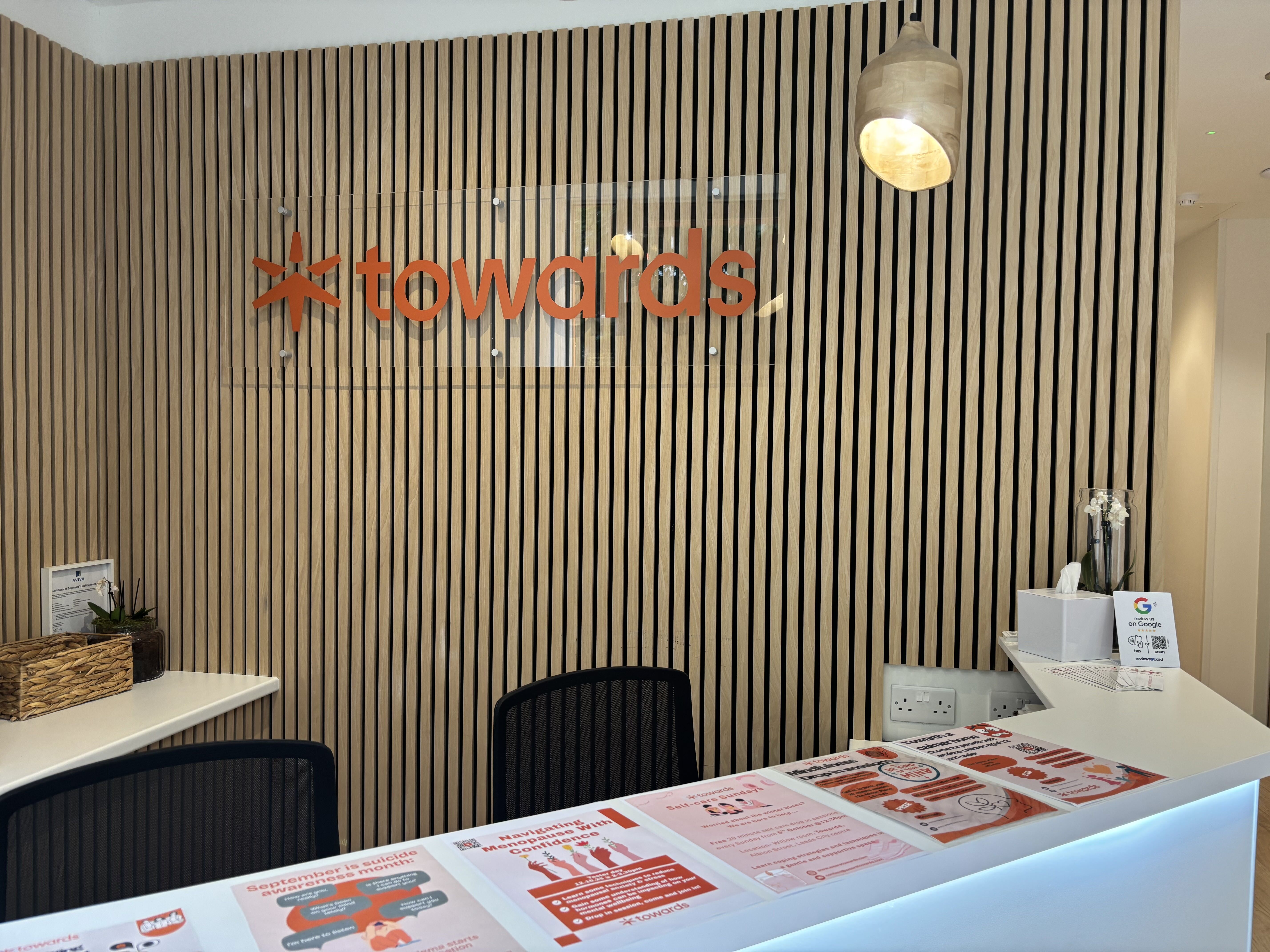
Many people find that online therapy suits their schedule and comfort. At Towards, you can have therapy sessions via secure video call, phone, or instant messaging.
Our online counselling services are just as effective as face-to-face sessions. They follow the same structure, confidentiality, and professional standards.
You’ll receive reminders, session summaries (if requested), and flexible rescheduling options to make therapy more accessible and consistent.
Many people find that online therapy suits their schedule and comfort. At Towards, you can have therapy sessions via secure video call, phone, or instant messaging.
Our online counselling services are just as effective as face-to-face sessions. They follow the same structure, confidentiality, and professional standards.
You’ll receive reminders, session summaries (if requested), and flexible rescheduling options to make therapy more accessible and consistent.
Many people find that online therapy suits their schedule and comfort. At Towards, you can have therapy sessions via secure video call, phone, or instant messaging.
Our online counselling services are just as effective as face-to-face sessions. They follow the same structure, confidentiality, and professional standards.
You’ll receive reminders, session summaries (if requested), and flexible rescheduling options to make therapy more accessible and consistent.
Many people find that online therapy suits their schedule and comfort. At Towards, you can have therapy sessions via secure video call, phone, or instant messaging.
Our online counselling services are just as effective as face-to-face sessions. They follow the same structure, confidentiality, and professional standards.
You’ll receive reminders, session summaries (if requested), and flexible rescheduling options to make therapy more accessible and consistent.
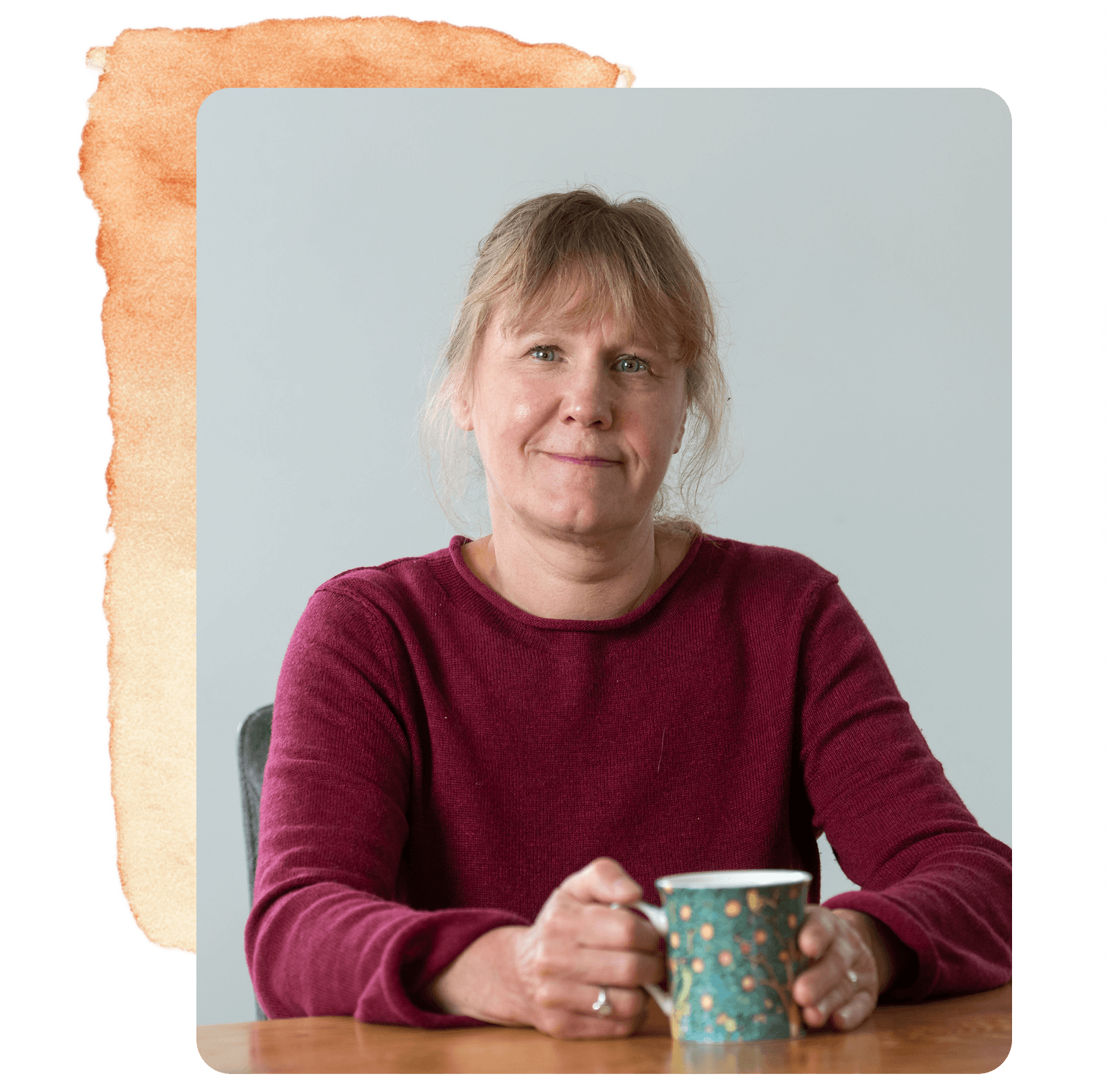
Therapy for young people and families
We specialise in working with young people aged 12 to 18, helping them manage anxiety, low mood, school stress, social pressure, and self-esteem challenges.
We understand the developmental, emotional, and social challenges young people face. Sessions are supportive and age-appropriate, helping them build resilience and emotional awareness.
Parents are also supported through joint sessions, progress feedback, and family guidance where appropriate.
If you’re a parent in Leeds looking for help for your teenager, we’re here to make the process clear and straightforward.
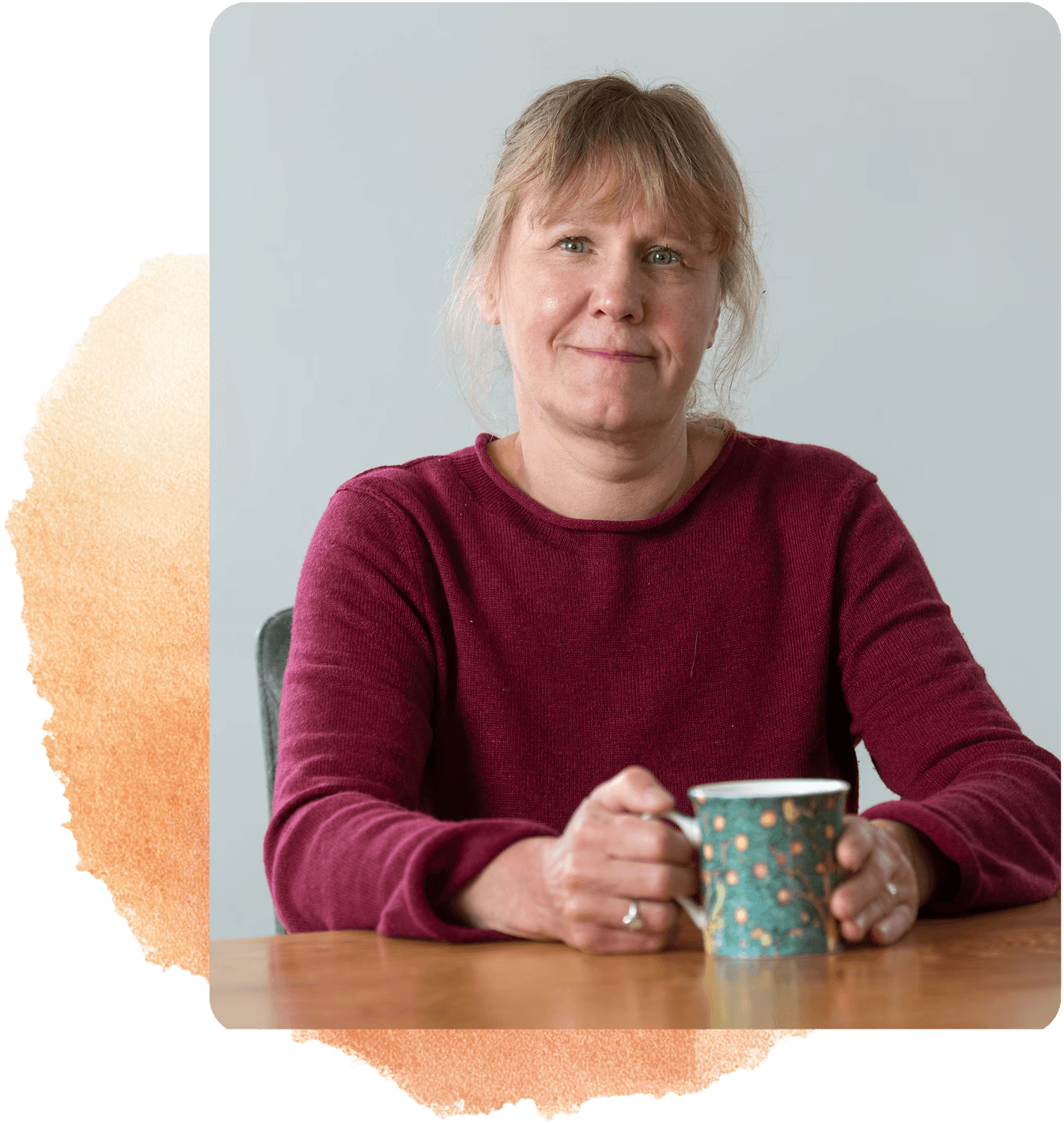

Therapy for young people and families
We specialise in working with young people aged 12 to 18, helping them manage anxiety, low mood, school stress, social pressure, and self-esteem challenges.
We understand the developmental, emotional, and social challenges young people face. Sessions are supportive and age-appropriate, helping them build resilience and emotional awareness.
Parents are also supported through joint sessions, progress feedback, and family guidance where appropriate.
If you’re a parent in Leeds looking for help for your teenager, we’re here to make the process clear and straightforward.
We specialise in working with young people aged 12 to 18, helping them manage anxiety, low mood, school stress, social pressure, and self-esteem challenges.
We understand the developmental, emotional, and social challenges young people face. Sessions are supportive and age-appropriate, helping them build resilience and emotional awareness.
Parents are also supported through joint sessions, progress feedback, and family guidance where appropriate.
If you’re a parent in Leeds looking for help for your teenager, we’re here to make the process clear and straightforward.
How to start therapy with us
How to start therapy with us
You don’t need a GP referral to begin. We don’t have a waiting list either.
Get started right now or contact us by email at press@wearetowards.com for further inquiries.
You’ll be matched with a suitable therapist to discuss your needs and preferences. After that, your therapy sessions can start online or at our centre at Albion Place, Leeds, LS1
We also accept referrals from schools, universities, and healthcare professionals who trust us to provide timely and ethical mental health support.
You don’t need a GP referral to begin. We don’t have a waiting list either.
Get started right now or contact us by email at press@wearetowards.com for further inquiries.
You’ll be matched with a suitable therapist to discuss your needs and preferences. After that, your therapy sessions can start online or at our centre at Albion Place, Leeds, LS1
We also accept referrals from schools, universities, and healthcare professionals who trust us to provide timely and ethical mental health support.
What to expect in your first therapy or counselling session
What to expect in your first therapy or counselling session
Your first therapy session is about getting to know each other. You’ll discuss what brings you to therapy and what you hope to achieve.
The therapist will explain confidentiality, session structure, and any relevant frameworks they use. You don’t need to prepare anything. Just come with an open mind and a willingness to talk.
Some people feel nervous at first, which is completely normal. Over time, sessions become a place you look forward to; a moment to pause, reflect, and grow.
If you are unsure what type of therapy or support is right for you, we can help you decide. Our clinical team will guide you to the best therapist and treatment plan for your goals.
The value of ongoing support
Therapy isn’t about quick fixes. It’s about gradual, lasting change. Some clients work with us for a few months, others for a year or more. What matters is progress, not perfection.
Our therapists check in regularly to review how you’re feeling and adjust the approach if needed. You’re in control of the pace and direction of your therapy journey.
When you finish therapy, you’ll leave with practical tools, self-awareness, and emotional strategies that continue to help you long after sessions end.
Your first therapy session is about getting to know each other. You’ll discuss what brings you to therapy and what you hope to achieve.
The therapist will explain confidentiality, session structure, and any relevant frameworks they use. You don’t need to prepare anything. Just come with an open mind and a willingness to talk.
Some people feel nervous at first, which is completely normal. Over time, sessions become a place you look forward to; a moment to pause, reflect, and grow.
If you are unsure what type of therapy or support is right for you, we can help you decide. Our clinical team will guide you to the best therapist and treatment plan for your goals.
The value of ongoing support
Therapy isn’t about quick fixes. It’s about gradual, lasting change. Some clients work with us for a few months, others for a year or more. What matters is progress, not perfection.
Our therapists check in regularly to review how you’re feeling and adjust the approach if needed. You’re in control of the pace and direction of your therapy journey.
When you finish therapy, you’ll leave with practical tools, self-awareness, and emotional strategies that continue to help you long after sessions end.
Why people in Leeds choose Towards
People choose Towards because they trust us to deliver therapy that feels human, not clinical. We’ve created a calm and welcoming space in central Leeds, making therapy easy to access before or after work, school, or university.
Our reputation has grown through word of mouth and recommendations from healthcare professionals. We’re proud to be part of the Leeds community, helping individuals and families move towards better mental health every day.
Why people in Leeds choose Towards
People choose Towards because they trust us to deliver therapy that feels human, not clinical. We’ve created a calm and welcoming space in central Leeds, making therapy easy to access before or after work, school, or university.
Our reputation has grown through word of mouth and recommendations from healthcare professionals. We’re proud to be part of the Leeds community, helping individuals and families move towards better mental health every day.
Therapy for young people and families
We specialise in working with young people aged 12 to 18, helping them manage anxiety, low mood, school stress, social pressure, and self-esteem challenges.
We understand the developmental, emotional, and social challenges young people face. Sessions are supportive and age-appropriate, helping them build resilience and emotional awareness.
Parents are also supported through joint sessions, progress feedback, and family guidance where appropriate.
If you’re a parent in Leeds looking for help for your teenager, we’re here to make the process clear and straightforward.
Types of therapy and counselling services we offer
Cognitive behavioral therapy (CBT)
CBT focuses on the link between your thoughts, feelings, and actions. It helps you spot unhelpful thinking patterns and replace them with more balanced ones.
CBT is a practical therapy that often includes exercises between sessions. It can help with depression, anxiety, OCD, PTSD, and phobias.
You and your counselling therapist will set small goals to build confidence and progress over time. CBT sessions can be one-to-one, online, or part of guided self-help programmes.
Acceptance and commitment therapy (ACT)
ACT is a form of mental health counselling where the therapist helps you face difficult thoughts and emotions rather than avoiding them. It teaches acceptance, mindfulness, and values-based action, helping you build a meaningful life even in the presence of pain.
ACT is used for all common mental health problems and long-term health conditions. It’s especially effective for anxiety, depression, chronic pain, and stress.
Counselling
Counselling is about having a safe space to talk through life’s difficulties. It may be related to grief, stress, trauma, or a big life change. Counselling helps you explore emotions, understand yourself better, and regain a sense of balance.
At Towards, our counsellors are warm, patient, and skilled at helping you uncover what’s really going on beneath the surface. Sessions can be short-term or open-ended, depending on your needs.
If you are looking for a counselling service in Leeds, you can meet with one of our counsellors at Albion Place, Leeds, LS1, or have a counselling session online for more flexibility.
Interpersonal therapy (IPT)
IPT looks at how your relationships affect your emotional wellbeing. It is especially helpful if you’re struggling with depression that seems linked to conflict, loss, or change in your relationships.
Through IPT, you’ll learn how to recognise unhealthy patterns and improve communication with the people who matter most.
Our therapists use IPT to help individuals and couples rebuild stronger, more supportive relationships.
Behavioural activation (BA)
BA is a structured therapy that helps people with depression re-engage with activities that bring meaning and pleasure. Low mood often leads people to withdraw, which then reinforces sadness.
Behavioural Activation breaks that cycle by setting small, achievable steps to reconnect you with positive experiences. This therapy is gentle yet powerful in helping people rediscover motivation and hope.
Eye movement desensitisation and reprocessing (EMDR)
EMDR is an evidence-based therapy for trauma and post-traumatic stress disorder (PTSD). It helps your brain reprocess difficult memories so they no longer feel overwhelming.
During sessions, you’ll be guided through a series of gentle eye movements or other bilateral stimulation while recalling aspects of a traumatic memory. Over time, the emotional charge of that memory fades, and you can begin to heal.
At Towards, our EMDR therapists are fully trained and experienced in supporting trauma recovery in a safe and compassionate way.
Types of therapy and counselling services we offer
Cognitive behavioral therapy (CBT)
CBT focuses on the link between your thoughts, feelings, and actions. It helps you spot unhelpful thinking patterns and replace them with more balanced ones.
CBT is a practical therapy that often includes exercises between sessions. It can help with depression, anxiety, OCD, PTSD, and phobias.
You and your counselling therapist will set small goals to build confidence and progress over time. CBT sessions can be one-to-one, online, or part of guided self-help programmes.
Acceptance and commitment therapy (ACT)
ACT is a form of mental health counselling where the therapist helps you face difficult thoughts and emotions rather than avoiding them. It teaches acceptance, mindfulness, and values-based action, helping you build a meaningful life even in the presence of pain.
ACT is used for all common mental health problems and long-term health conditions. It’s especially effective for anxiety, depression, chronic pain, and stress.
Counselling
Counselling is about having a safe space to talk through life’s difficulties. It may be related to grief, stress, trauma, or a big life change. Counselling helps you explore emotions, understand yourself better, and regain a sense of balance.
At Towards, our counsellors are warm, patient, and skilled at helping you uncover what’s really going on beneath the surface. Sessions can be short-term or open-ended, depending on your needs.
If you are looking for a counselling service in Leeds, you can meet with one of our counsellors at Albion Place, Leeds, LS1, or have a counselling session online for more flexibility.
Interpersonal therapy (IPT)
IPT looks at how your relationships affect your emotional wellbeing. It is especially helpful if you’re struggling with depression that seems linked to conflict, loss, or change in your relationships.
Through IPT, you’ll learn how to recognise unhealthy patterns and improve communication with the people who matter most.
Our therapists use IPT to help individuals and couples rebuild stronger, more supportive relationships.
Behavioural activation (BA)
BA is a structured therapy that helps people with depression re-engage with activities that bring meaning and pleasure. Low mood often leads people to withdraw, which then reinforces sadness.
Behavioural Activation breaks that cycle by setting small, achievable steps to reconnect you with positive experiences. This therapy is gentle yet powerful in helping people rediscover motivation and hope.
Eye movement desensitisation and reprocessing (EMDR)
EMDR is an evidence-based therapy for trauma and post-traumatic stress disorder (PTSD). It helps your brain reprocess difficult memories so they no longer feel overwhelming.
During sessions, you’ll be guided through a series of gentle eye movements or other bilateral stimulation while recalling aspects of a traumatic memory. Over time, the emotional charge of that memory fades, and you can begin to heal.
At Towards, our EMDR therapists are fully trained and experienced in supporting trauma recovery in a safe and compassionate way.
Finding the right therapist for you
Finding the right therapist is one of the most important steps in the journey. A good therapist creates a sense of safety, trust, and understanding.
At Towards, every therapist is fully qualified and clinically supervised. But what truly sets us apart is the way we match clients to the therapist who best fits their personality, goals, and circumstances.
You can choose to work with a male or female therapist, have sessions online or in person, and select someone with specific experience, whether it’s adolescent therapy, anxiety, trauma, or relationship support.
We also offer therapy for students and working professionals. We recognize the pressures of modern life. Hence, we ensure flexible session times.
Finding the right therapist for you
Finding the right therapist is one of the most important steps in the journey. A good therapist creates a sense of safety, trust, and understanding.
At Towards, every therapist is fully qualified and clinically supervised. But what truly sets us apart is the way we match clients to the therapist who best fits their personality, goals, and circumstances.
You can choose to work with a male or female therapist, have sessions online or in person, and select someone with specific experience, whether it’s adolescent therapy, anxiety, trauma, or relationship support.
We also offer therapy for students and working professionals. We recognize the pressures of modern life. Hence, we ensure flexible session times.
How to start therapy with us
You don’t need a GP referral to begin. We don’t have a waiting list either.
Get started right now or contact us by email at press@wearetowards.com for further inquiries.
You’ll be matched with a suitable therapist to discuss your needs and preferences. After that, your therapy sessions can start online or at our centre at Albion Place, Leeds, LS1
We also accept referrals from schools, universities, and healthcare professionals who trust us to provide timely and ethical mental health support.
You don’t need a GP referral to begin. We don’t have a waiting list either.
Get started right now or contact us by email at press@wearetowards.com for further inquiries.
You’ll be matched with a suitable therapist to discuss your needs and preferences. After that, your therapy sessions can start online or at our centre at Albion Place, Leeds, LS1
We also accept referrals from schools, universities, and healthcare professionals who trust us to provide timely and ethical mental health support.
Why people in Leeds choose Towards
People choose Towards because they trust us to deliver therapy that feels human, not clinical. We’ve created a calm and welcoming space in central Leeds, making therapy easy to access before or after work, school, or university.
Our reputation has grown through word of mouth and recommendations from healthcare professionals. We’re proud to be part of the Leeds community, helping individuals and families move towards better mental health every day.