DBT (dialectical behaviour therapy) in Bristol
DBT (dialectical behaviour therapy) in Bristol
DBT (dialectical behaviour therapy) in Bristol
If you're looking for DBT in Bristol, you've probably already tried to manage things on your own for longer than you'd like to admit. Perhaps your emotions feel too intense too often. Maybe your relationships keep breaking down in ways you can't quite explain. Or you've tried therapy before and left feeling like it didn't get to the root of things. Whatever's brought you here, you don't need to have the right words for it yet.
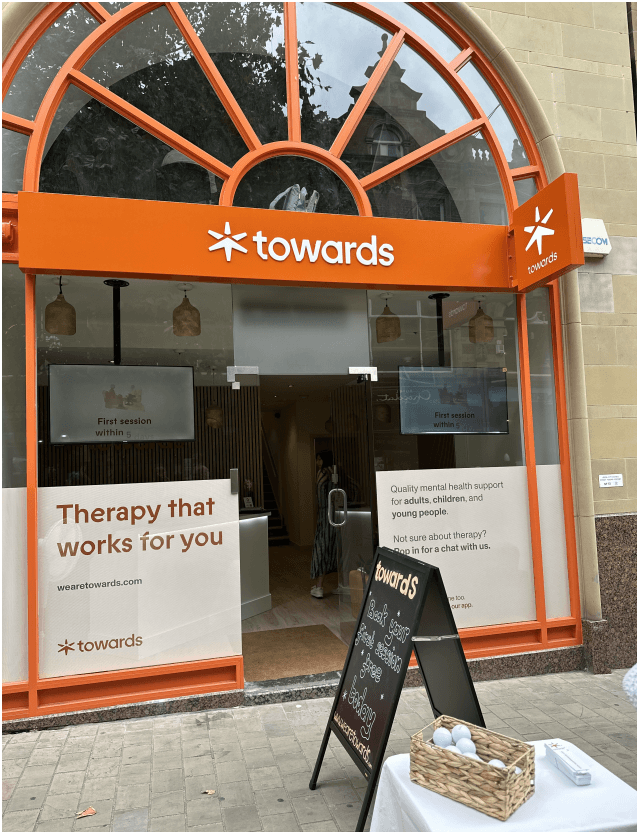
Towards offers dialectical behaviour therapy in Bristol, from our Hub on White Ladies Road in Redlands, close to the University of Bristol, as well as online.
Our therapists are accredited by the BABCP, BACP, BPS or HCPC and will work with you to understand whether DBT is the right approach for your needs.
Appointments are often available within a week. Sessions start with a free 50-minutes assessment.
If you're looking for DBT in Bristol, you've probably already tried to manage things on your own for longer than you'd like to admit. Perhaps your emotions feel too intense too often. Maybe your relationships keep breaking down in ways you can't quite explain. Or you've tried therapy before and left feeling like it didn't get to the root of things. Whatever's brought you here, you don't need to have the right words for it yet.
Towards offers dialectical behaviour therapy in Bristol, from our Hub on White Ladies Road in Redlands, close to the University of Bristol, as well as online.
Our therapists are accredited by the BABCP, BACP, BPS or HCPC and will work with you to understand whether DBT is the right approach for your needs.
Appointments are often available within a week. Sessions start with a free 50-minutes assessment.
If you're looking for DBT in Bristol, you've probably already tried to manage things on your own for longer than you'd like to admit. Perhaps your emotions feel too intense too often. Maybe your relationships keep breaking down in ways you can't quite explain. Or you've tried therapy before and left feeling like it didn't get to the root of things. Whatever's brought you here, you don't need to have the right words for it yet.
Towards offers dialectical behaviour therapy in Bristol, from our Hub on White Ladies Road in Redlands, close to the University of Bristol, as well as online.
Our therapists are accredited by the BABCP, BACP, BPS or HCPC and will work with you to understand whether DBT is the right approach for your needs.
Appointments are often available within a week. Sessions start with a free 50-minutes assessment.


What is DBT?
What is DBT?
What is DBT?
Dialectical behaviour therapy is a structured, evidence-based therapy. It was developed for people who experience very intense emotions and struggle to manage them safely. It's built on the idea that you can accept where you are right now, and still work towards change. That's the "dialectic" in DBT, holding two things that seem to pull in different directions at once, and finding a way to work with both.
Unlike therapies that focus mainly on talking through problems, DBT is skills-based. You'll learn practical skills for coping with distress, managing overwhelming emotions, and navigating relationships more effectively, before practising those skills in everyday life between sessions. It's recommended for a range of difficulties involving emotional intensity, where other approaches haven't given people the progress they were hoping for.
Dialectical behaviour therapy is a structured, evidence-based therapy. It was developed for people who experience very intense emotions and struggle to manage them safely. It's built on the idea that you can accept where you are right now, and still work towards change. That's the "dialectic" in DBT, holding two things that seem to pull in different directions at once, and finding a way to work with both.
Unlike therapies that focus mainly on talking through problems, DBT is skills-based. You'll learn practical skills for coping with distress, managing overwhelming emotions, and navigating relationships more effectively, before practising those skills in everyday life between sessions. It's recommended for a range of difficulties involving emotional intensity, where other approaches haven't given people the progress they were hoping for.
Dialectical behaviour therapy is a structured, evidence-based therapy. It was developed for people who experience very intense emotions and struggle to manage them safely. It's built on the idea that you can accept where you are right now, and still work towards change. That's the "dialectic" in DBT, holding two things that seem to pull in different directions at once, and finding a way to work with both.
Unlike therapies that focus mainly on talking through problems, DBT is skills-based. You'll learn practical skills for coping with distress, managing overwhelming emotions, and navigating relationships more effectively, before practising those skills in everyday life between sessions. It's recommended for a range of difficulties involving emotional intensity, where other approaches haven't given people the progress they were hoping for.
The skills you'll develop through DBT
The skills you'll develop through DBT
The skills you'll develop through DBT
DBT is built around four core skill areas, and while the names can sound clinical, what they give you is very practical.
Mindfulness helps you notice what's happening in the present moment, including your emotions, rather than being swept along by them or avoiding them altogether. It's the foundation the other three skill areas build on.
Distress tolerance gives you ways to get through intense moments without making things worse. This might be an urge to self-harm, an argument that's escalating, or a wave of panic. These are the skills that help when things need to be survived, not solved, right now.
Emotion regulation helps you understand what your emotions are telling you, reduce how often you're overwhelmed by them, and respond rather than react. Over time, this can mean emotions feel less like something happening to you and more like something you can work with.
Interpersonal effectiveness focuses on communicating clearly, setting boundaries, and maintaining relationships even during conflict, without giving in to keep the peace or pushing people away.
Your therapist will introduce and practise these skills with you, applying them to situations you're facing in everyday life rather than asking you to work through them alone.
DBT is built around four core skill areas, and while the names can sound clinical, what they give you is very practical.
Mindfulness helps you notice what's happening in the present moment, including your emotions, rather than being swept along by them or avoiding them altogether. It's the foundation the other three skill areas build on.
Distress tolerance gives you ways to get through intense moments without making things worse. This might be an urge to self-harm, an argument that's escalating, or a wave of panic. These are the skills that help when things need to be survived, not solved, right now.
Emotion regulation helps you understand what your emotions are telling you, reduce how often you're overwhelmed by them, and respond rather than react. Over time, this can mean emotions feel less like something happening to you and more like something you can work with.
Interpersonal effectiveness focuses on communicating clearly, setting boundaries, and maintaining relationships even during conflict, without giving in to keep the peace or pushing people away.
Your therapist will introduce and practise these skills with you, applying them to situations you're facing in everyday life rather than asking you to work through them alone.
DBT is built around four core skill areas, and while the names can sound clinical, what they give you is very practical.
Mindfulness helps you notice what's happening in the present moment, including your emotions, rather than being swept along by them or avoiding them altogether. It's the foundation the other three skill areas build on.
Distress tolerance gives you ways to get through intense moments without making things worse. This might be an urge to self-harm, an argument that's escalating, or a wave of panic. These are the skills that help when things need to be survived, not solved, right now.
Emotion regulation helps you understand what your emotions are telling you, reduce how often you're overwhelmed by them, and respond rather than react. Over time, this can mean emotions feel less like something happening to you and more like something you can work with.
Interpersonal effectiveness focuses on communicating clearly, setting boundaries, and maintaining relationships even during conflict, without giving in to keep the peace or pushing people away.
Your therapist will introduce and practise these skills with you, applying them to situations you're facing in everyday life rather than asking you to work through them alone.
What happens during therapy
What happens during therapy
DBT sessions are structured but never rigid. Early sessions focus on understanding what's brought you here, what patterns you'd like to change, and what's got in the way of change before.
From there, you and your therapist will work through the relevant skills together, applying them to real situations you're facing rather than treating them as abstract theory.
Between sessions, you'll be encouraged to practise what you've learned. Many clients find it helpful to notice, even briefly, when a skill made a difficult moment more manageable. Your therapist will check in on this together with you, not to test you, but to understand what's working and adjust the approach where it isn't.
DBT is tailored to your individual needs and may be delivered alongside other therapeutic approaches where appropriate. We'll talk through what is most likely to help your situation rather than following a one-size-fits-all programme.
DBT sessions are structured but never rigid. Early sessions focus on understanding what's brought you here, what patterns you'd like to change, and what's got in the way of change before.
From there, you and your therapist will work through the relevant skills together, applying them to real situations you're facing rather than treating them as abstract theory.
Between sessions, you'll be encouraged to practise what you've learned. Many clients find it helpful to notice, even briefly, when a skill made a difficult moment more manageable. Your therapist will check in on this together with you, not to test you, but to understand what's working and adjust the approach where it isn't.
DBT is tailored to your individual needs and may be delivered alongside other therapeutic approaches where appropriate. We'll talk through what is most likely to help your situation rather than following a one-size-fits-all programme.
DBT sessions are structured but never rigid. Early sessions focus on understanding what's brought you here, what patterns you'd like to change, and what's got in the way of change before.
From there, you and your therapist will work through the relevant skills together, applying them to real situations you're facing rather than treating them as abstract theory.
Between sessions, you'll be encouraged to practise what you've learned. Many clients find it helpful to notice, even briefly, when a skill made a difficult moment more manageable. Your therapist will check in on this together with you, not to test you, but to understand what's working and adjust the approach where it isn't.
DBT is tailored to your individual needs and may be delivered alongside other therapeutic approaches where appropriate. We'll talk through what is most likely to help your situation rather than following a one-size-fits-all programme.
Why choose Towards for DBT in Bristol
Why choose Towards for DBT in Bristol
Choosing a therapy provider, particularly for something as personal as DBT, is not a decision to make lightly. We don't expect you to take our word for it without understanding how we work.
No long waiting lists. Appointments in Bristol are available within a week, not the months some services require. Here's why clients come to us repeatedly;
A genuine matching process, not a directory of profiles you're left to choose between alone.
Accredited therapists, with registration through the BABCP, BACP, BPS or HCPC.
In-person and online sessions, from our Hub on White Ladies Road or from wherever suits you.
Transparent pricing, agreed before you commit to anything.
No arbitrary limit on therapy length. We work with you to understand what you need, not a fixed number of sessions decided in advance.
Secure asynchronous chat with your therapist between sessions and ongoing support where appropriate.
A welcoming, non-judgemental environment where you'll be listened to and supported throughout therapy.
We understand that starting therapy again after a disappointing experience elsewhere takes real courage. We won't promise DBT will solve everything, because no honest therapist can. But we can promise you'll be heard, matched thoughtfully, and given the time and support needed to work towards meaningful change.
Choosing a therapy provider, particularly for something as personal as DBT, is not a decision to make lightly. We don't expect you to take our word for it without understanding how we work.
No long waiting lists. Appointments in Bristol are available within a week, not the months some services require. Here's why clients come to us repeatedly;
A genuine matching process, not a directory of profiles you're left to choose between alone.
Accredited therapists, with registration through the BABCP, BACP, BPS or HCPC.
In-person and online sessions, from our Hub on White Ladies Road or from wherever suits you.
Transparent pricing, agreed before you commit to anything.
No arbitrary limit on therapy length. We work with you to understand what you need, not a fixed number of sessions decided in advance.
Secure asynchronous chat with your therapist between sessions and ongoing support where appropriate.
A welcoming, non-judgemental environment where you'll be listened to and supported throughout therapy.
We understand that starting therapy again after a disappointing experience elsewhere takes real courage. We won't promise DBT will solve everything, because no honest therapist can. But we can promise you'll be heard, matched thoughtfully, and given the time and support needed to work towards meaningful change.
Choosing a therapy provider, particularly for something as personal as DBT, is not a decision to make lightly. We don't expect you to take our word for it without understanding how we work.
No long waiting lists. Appointments in Bristol are available within a week, not the months some services require. Here's why clients come to us repeatedly;
A genuine matching process, not a directory of profiles you're left to choose between alone.
Accredited therapists, with registration through the BABCP, BACP, BPS or HCPC.
In-person and online sessions, from our Hub on White Ladies Road or from wherever suits you.
Transparent pricing, agreed before you commit to anything.
No arbitrary limit on therapy length. We work with you to understand what you need, not a fixed number of sessions decided in advance.
Secure asynchronous chat with your therapist between sessions and ongoing support where appropriate.
A welcoming, non-judgemental environment where you'll be listened to and supported throughout therapy.
We understand that starting therapy again after a disappointing experience elsewhere takes real courage. We won't promise DBT will solve everything, because no honest therapist can. But we can promise you'll be heard, matched thoughtfully, and given the time and support needed to work towards meaningful change.
Choosing a therapy provider, particularly for something as personal as DBT, is not a decision to make lightly. We don't expect you to take our word for it without understanding how we work.
No long waiting lists. Appointments in Bristol are available within a week, not the months some services require. Here's why clients come to us repeatedly;
A genuine matching process, not a directory of profiles you're left to choose between alone.
Accredited therapists, with registration through the BABCP, BACP, BPS or HCPC.
In-person and online sessions, from our Hub on White Ladies Road or from wherever suits you.
Transparent pricing, agreed before you commit to anything.
No arbitrary limit on therapy length. We work with you to understand what you need, not a fixed number of sessions decided in advance.
Secure asynchronous chat with your therapist between sessions and ongoing support where appropriate.
A welcoming, non-judgemental environment where you'll be listened to and supported throughout therapy.
We understand that starting therapy again after a disappointing experience elsewhere takes real courage. We won't promise DBT will solve everything, because no honest therapist can. But we can promise you'll be heard, matched thoughtfully, and given the time and support needed to work towards meaningful change.
If you're not sure yet, still reach out
If you're not sure yet, still reach out
You don't have to be certain DBT is right for you before contacting us. Many people reach out simply because something isn't working, without knowing what would help instead. That uncertainty is a completely normal place to start from, and talking it through with someone who understands DBT is the clearest way to find out.
If you're currently in crisis or unable to keep yourself safe, please contact your GP, NHS 111, or the emergency services. Towards is not a crisis service, though we can support you as part of your ongoing care once you're safe.
You don't have to be certain DBT is right for you before contacting us. Many people reach out simply because something isn't working, without knowing what would help instead. That uncertainty is a completely normal place to start from, and talking it through with someone who understands DBT is the clearest way to find out.
If you're currently in crisis or unable to keep yourself safe, please contact your GP, NHS 111, or the emergency services. Towards is not a crisis service, though we can support you as part of your ongoing care once you're safe.
You don't have to be certain DBT is right for you before contacting us. Many people reach out simply because something isn't working, without knowing what would help instead. That uncertainty is a completely normal place to start from, and talking it through with someone who understands DBT is the clearest way to find out.
If you're currently in crisis or unable to keep yourself safe, please contact your GP, NHS 111, or the emergency services. Towards is not a crisis service, though we can support you as part of your ongoing care once you're safe.
Getting started
Getting started
Getting started
You've likely already thought about reaching out more than once before landing here. Whenever you're ready, we're here to talk it through, without judgement and without any pressure to have it all figured out first.
You've likely already thought about reaching out more than once before landing here. Whenever you're ready, we're here to talk it through, without judgement and without any pressure to have it all figured out first.
You've likely already thought about reaching out more than once before landing here. Whenever you're ready, we're here to talk it through, without judgement and without any pressure to have it all figured out first.
FAQs
FAQs
FAQs
How long does DBT usually last?
This depends on what you need. We don't limit therapy to a fixed number of sessions. Your therapist will review progress with you regularly rather than working to an arbitrary end date.
Do I need a diagnosis to access DBT?
No. Many people benefit from DBT without a formal diagnosis. What matters is whether the difficulties you're experiencing fit what DBT is designed to help with.
Do I need a referral?
No referral is needed. You can contact us directly to arrange an appointment.
Is DBT available online?
Yes. DBT is available both online and in person at our Bristol Hub, depending on what suits you.
How much does DBT cost?
Pricing depends on the experience level of your therapist, and we'll be transparent about cost before you commit to anything. Get in touch for current pricing.
Can teenagers receive DBT?
DBT can be adapted for younger people experiencing intense emotions or relationship difficulties. Speak to our team about the right support for your teenager.
Can I switch to another type of therapy if DBT isn't suitable?
Yes. If DBT turns out not to be the right fit, we offer CBT, counselling, ACT and other approaches, and can help you move to whichever suits you better.
How long does DBT usually last?
This depends on what you need. We don't limit therapy to a fixed number of sessions. Your therapist will review progress with you regularly rather than working to an arbitrary end date.
Do I need a diagnosis to access DBT?
No. Many people benefit from DBT without a formal diagnosis. What matters is whether the difficulties you're experiencing fit what DBT is designed to help with.
Do I need a referral?
No referral is needed. You can contact us directly to arrange an appointment.
Is DBT available online?
Yes. DBT is available both online and in person at our Bristol Hub, depending on what suits you.
How much does DBT cost?
Pricing depends on the experience level of your therapist, and we'll be transparent about cost before you commit to anything. Get in touch for current pricing.
Can teenagers receive DBT?
DBT can be adapted for younger people experiencing intense emotions or relationship difficulties. Speak to our team about the right support for your teenager.
Can I switch to another type of therapy if DBT isn't suitable?
Yes. If DBT turns out not to be the right fit, we offer CBT, counselling, ACT and other approaches, and can help you move to whichever suits you better.
How long does DBT usually last?
This depends on what you need. We don't limit therapy to a fixed number of sessions. Your therapist will review progress with you regularly rather than working to an arbitrary end date.
Do I need a diagnosis to access DBT?
No. Many people benefit from DBT without a formal diagnosis. What matters is whether the difficulties you're experiencing fit what DBT is designed to help with.
Do I need a referral?
No referral is needed. You can contact us directly to arrange an appointment.
Is DBT available online?
Yes. DBT is available both online and in person at our Bristol Hub, depending on what suits you.
How much does DBT cost?
Pricing depends on the experience level of your therapist, and we'll be transparent about cost before you commit to anything. Get in touch for current pricing.
Can teenagers receive DBT?
DBT can be adapted for younger people experiencing intense emotions or relationship difficulties. Speak to our team about the right support for your teenager.
Can I switch to another type of therapy if DBT isn't suitable?
Yes. If DBT turns out not to be the right fit, we offer CBT, counselling, ACT and other approaches, and can help you move to whichever suits you better.

Marriage counselling Leeds
Even strong relationships can hit rocky patches. You might feel like you’re drifting apart, stuck in recurring arguments, or simply missing each other emotionally. Marriage counselling in Leeds creates space to step back, talk openly, and understand what each of you needs to feel connected again.
At Towards, you’ll work with therapists experienced in helping couples through all stages of life, from adjusting to parenthood to navigating retirement to untangling years of built-up tension. Sessions aren’t about blame, but about learning how to listen, communicate, and rebuild your connection.
Marriage counselling Leeds
Even strong relationships can hit rocky patches. You might feel like you’re drifting apart, stuck in recurring arguments, or simply missing each other emotionally. Marriage counselling in Leeds creates space to step back, talk openly, and understand what each of you needs to feel connected again.
At Towards, you’ll work with therapists experienced in helping couples through all stages of life, from adjusting to parenthood to navigating retirement to untangling years of built-up tension. Sessions aren’t about blame, but about learning how to listen, communicate, and rebuild your connection.
Online Couples Counselling UK
If you can’t make it to our Leeds hub, you can still access expert support through our online couples counselling UK-wide. Using our secure, encrypted app, you and your partner meet with the same therapist each time, building consistency and trust.
Online sessions work well if:
● You and your partner live in different locations.
● Your schedule is full with work, parenting, or caring for others.
● You feel more comfortable talking from home.
● You want support without the travel.
For many couples, being in their own space makes opening up easier and conversations more honest.
If you can’t make it to our Leeds hub, you can still access expert support through our online couples counselling UK-wide. Using our secure, encrypted app, you and your partner meet with the same therapist each time, building consistency and trust.
Online sessions work well if:
● You and your partner live in different locations.
● Your schedule is full with work, parenting, or caring for others.
● You feel more comfortable talking from home.
● You want support without the travel.
For many couples, being in their own space makes opening up easier and conversations more honest.