EMDR Therapy in Leeds
EMDR Therapy in Leeds
EMDR Therapy in Leeds
At Towards, we offer specialist EMDR therapy in Leeds for adults, young people, and anyone who has been affected by trauma or PTSD. Our therapists are carefully matched to you, and most people are seen within days of making contact. There's no need for GP referral, waiting list, and no complicated intake process.
For some people, trauma is a specific event they can't stop replaying. For others, it's a low-level hum of hypervigilance, numbness, or a sense that something shifted and never quite shifted back. Whichever, there's a good chance you've spent a long time telling yourself you should be over it by now. You shouldn't have to keep telling yourself that, and you don't have to keep managing this alone.
Speak with a therapist. Your first session is free
At Towards, we offer specialist EMDR therapy in Leeds for adults, young people, and anyone who has been affected by trauma or PTSD. Our therapists are carefully matched to you, and most people are seen within days of making contact. There's no need for GP referral, waiting list, and no complicated intake process.
For some people, trauma is a specific event they can't stop replaying. For others, it's a low-level hum of hypervigilance, numbness, or a sense that something shifted and never quite shifted back. Whichever, there's a good chance you've spent a long time telling yourself you should be over it by now. You shouldn't have to keep telling yourself that, and you don't have to keep managing this alone.
Speak with a therapist. Your first session is free
At Towards, we offer specialist EMDR therapy in Leeds for adults, young people, and anyone who has been affected by trauma or PTSD. Our therapists are carefully matched to you, and most people are seen within days of making contact. There's no need for GP referral, waiting list, and no complicated intake process.
For some people, trauma is a specific event they can't stop replaying. For others, it's a low-level hum of hypervigilance, numbness, or a sense that something shifted and never quite shifted back. Whichever, there's a good chance you've spent a long time telling yourself you should be over it by now. You shouldn't have to keep telling yourself that, and you don't have to keep managing this alone.
Speak with a therapist. Your first session is free
EMDR is the right step to take when the past keeps showing up in the present
EMDR is the right step to take when the past keeps showing up in the present
EMDR is the right step to take when the past keeps showing up in the present
Trauma has a way of staying alive long after the event itself. You might find yourself startled by ordinary things, disconnected from people you care about, or unable to understand why certain situations trigger a response that feels completely out of proportion.
Some common signs that trauma may still be affecting you:
Intrusive memories, flashbacks, or nightmares
Feeling emotionally numb or cut off from your own feelings
Hypervigilance - a constant sense of being on alert
Avoidance of people, places, or situations associated with the experience
Shame, guilt, or the belief that what happened was your fault
Difficulty trusting others or feeling safe in relationships
Physical symptoms such as tension, fatigue, a body that doesn't feel like your own
One of the most persistent myths about trauma is that the response itself is a sign of weakness. It isn't. Trauma is a normal response to abnormal circumstances.
The goal of EMDR therapy is to help your mind and body process what happened in a way that lets you move forward.
Speak with our team about EMDR therapy in Leeds.
Trauma has a way of staying alive long after the event itself. You might find yourself startled by ordinary things, disconnected from people you care about, or unable to understand why certain situations trigger a response that feels completely out of proportion.
Some common signs that trauma may still be affecting you:
Intrusive memories, flashbacks, or nightmares
Feeling emotionally numb or cut off from your own feelings
Hypervigilance - a constant sense of being on alert
Avoidance of people, places, or situations associated with the experience
Shame, guilt, or the belief that what happened was your fault
Difficulty trusting others or feeling safe in relationships
Physical symptoms such as tension, fatigue, a body that doesn't feel like your own
One of the most persistent myths about trauma is that the response itself is a sign of weakness. It isn't. Trauma is a normal response to abnormal circumstances.
The goal of EMDR therapy is to help your mind and body process what happened in a way that lets you move forward.
Speak with our team about EMDR therapy in Leeds.
Trauma has a way of staying alive long after the event itself. You might find yourself startled by ordinary things, disconnected from people you care about, or unable to understand why certain situations trigger a response that feels completely out of proportion.
Some common signs that trauma may still be affecting you:
Intrusive memories, flashbacks, or nightmares
Feeling emotionally numb or cut off from your own feelings
Hypervigilance - a constant sense of being on alert
Avoidance of people, places, or situations associated with the experience
Shame, guilt, or the belief that what happened was your fault
Difficulty trusting others or feeling safe in relationships
Physical symptoms such as tension, fatigue, a body that doesn't feel like your own
One of the most persistent myths about trauma is that the response itself is a sign of weakness. It isn't. Trauma is a normal response to abnormal circumstances.
The goal of EMDR therapy is to help your mind and body process what happened in a way that lets you move forward.
Speak with our team about EMDR therapy in Leeds.
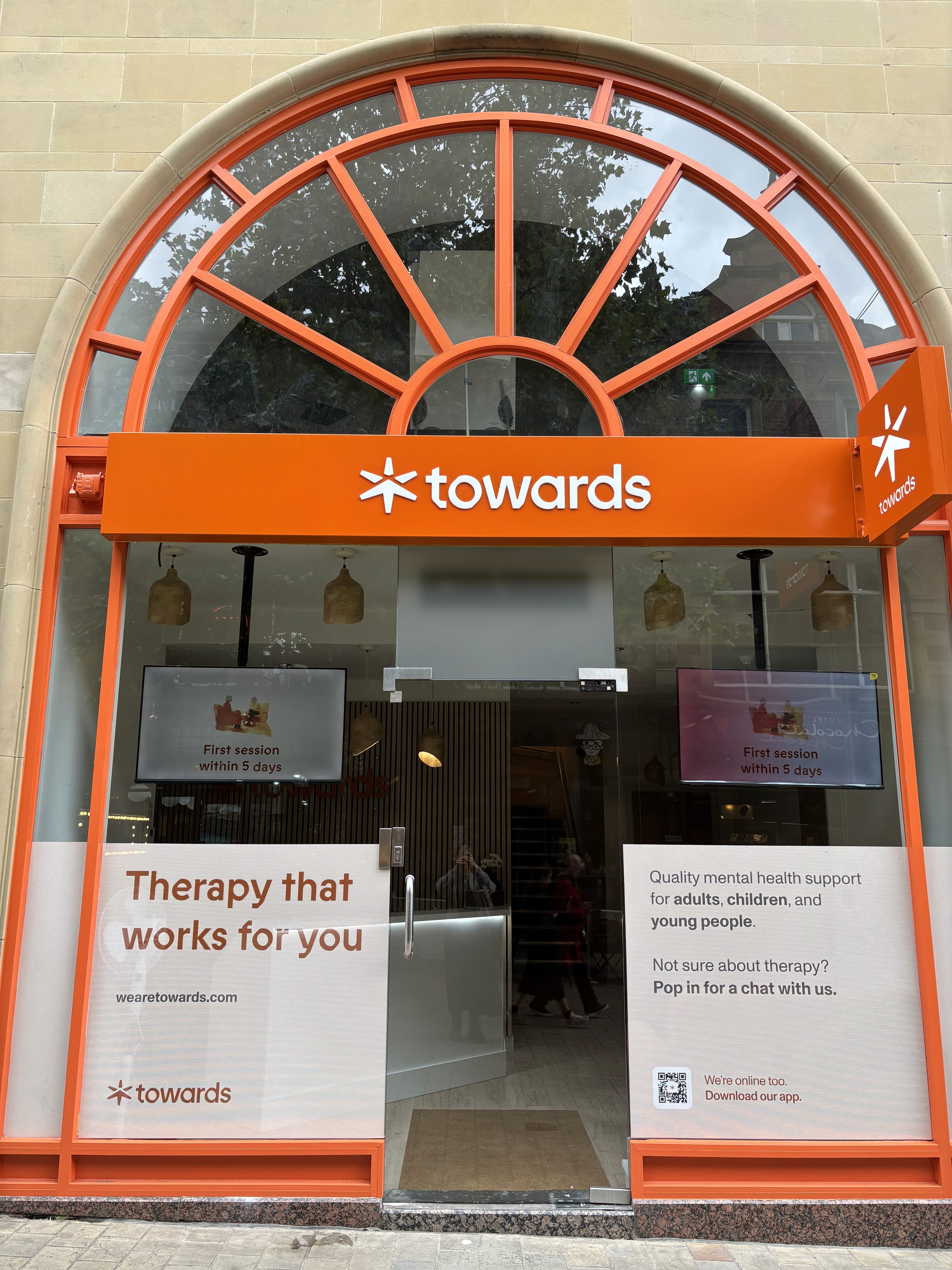
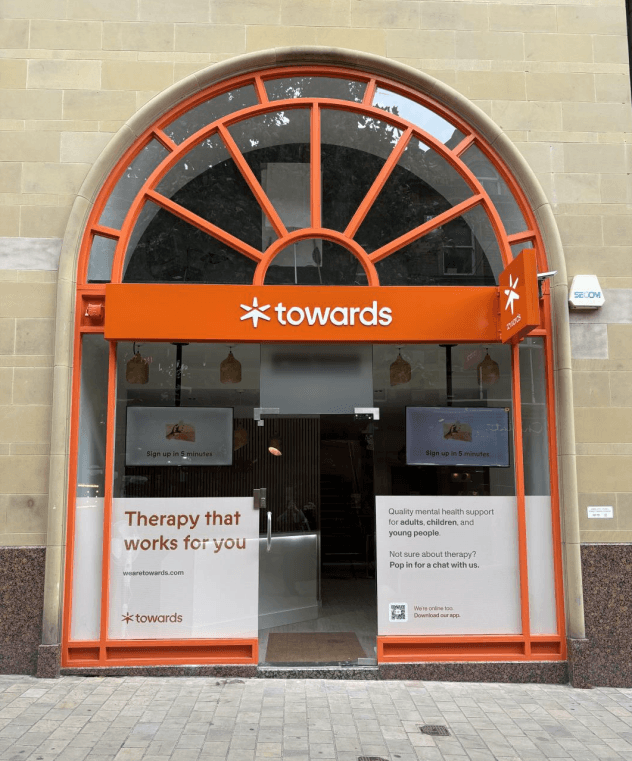
EMDR therapy in Leeds city centre
EMDR therapy in Leeds city centre
EMDR therapy in Leeds city centre
Addresses: 12a Albion Place, Leeds LS1
Email: contact@wearetowards
Opening hours:
Monday to Friday: 8.00 to 20.00
Saturday: 9.00 to 18.00
Sunday: 10.00 to 16.00
Book an EMDR therapy session at our Leeds city centre hub or choose the convenience of online therapy through our secure platform. Contact us to arrange an appointment or discuss how we can support you.
Addresses: 12a Albion Place, Leeds LS1
Email: contact@wearetowards
Opening hours:
Monday to Friday: 8.00 to 20.00
Saturday: 9.00 to 18.00
Sunday: 10.00 to 16.00
Book an EMDR therapy session at our Leeds city centre hub or choose the convenience of online therapy through our secure platform. Contact us to arrange an appointment or discuss how we can support you.
Addresses: 12a Albion Place, Leeds LS1
Email: contact@wearetowards
Opening hours:
Monday to Friday: 8.00 to 20.00
Saturday: 9.00 to 18.00
Sunday: 10.00 to 16.00
Book an EMDR therapy session at our Leeds city centre hub or choose the convenience of online therapy through our secure platform. Contact us to arrange an appointment or discuss how we can support you.
What EMDR therapy is and who it helps
What EMDR therapy is and who it helps
Eye Movement Desensitisation and Reprocessing (EMDR) is a structured, evidence-based therapy that helps people process traumatic memories that have become stuck.
EMDR works by asking you to bring a distressing memory to mind while simultaneously engaging in bilateral stimulation, typically following a therapist's moving fingers with your eyes.
You don't have to talk about the event in detail. Many people find that memories which once felt overwhelming begin to feel more like something that happened rather than something that's still happening.
EMDR therapy in Leeds at Towards is particularly effective for:
Post-traumatic stress disorder (PTSD) and complex PTSD
Single-incident trauma such as accidents, assaults, medical events, bereavements
Childhood trauma and adverse early experiences
Trauma linked to healthcare settings, which is especially relevant for NHS and frontline workers
Trauma connected to relationship abuse or domestic violence
Performance anxiety and phobias with traumatic roots
At Towards, therapy is never one-size-fits-all. Our therapists adapt both their language and their techniques to suit the individual.
EMDR vs. trauma therapy
Trauma therapy is an umbrella term for a range of treatments that help people recover from the effects of traumatic experiences, while EMDR therapy is one evidence-based approach within that category. EMDR uses guided bilateral stimulation to help the brain process distressing memories, offering an alternative to therapies that rely primarily on talking through past events.
Eye Movement Desensitisation and Reprocessing (EMDR) is a structured, evidence-based therapy that helps people process traumatic memories that have become stuck.
EMDR works by asking you to bring a distressing memory to mind while simultaneously engaging in bilateral stimulation, typically following a therapist's moving fingers with your eyes.
You don't have to talk about the event in detail. Many people find that memories which once felt overwhelming begin to feel more like something that happened rather than something that's still happening.
EMDR therapy in Leeds at Towards is particularly effective for:
Post-traumatic stress disorder (PTSD) and complex PTSD
Single-incident trauma such as accidents, assaults, medical events, bereavements
Childhood trauma and adverse early experiences
Trauma linked to healthcare settings, which is especially relevant for NHS and frontline workers
Trauma connected to relationship abuse or domestic violence
Performance anxiety and phobias with traumatic roots
At Towards, therapy is never one-size-fits-all. Our therapists adapt both their language and their techniques to suit the individual.
EMDR vs. trauma therapy
Trauma therapy is an umbrella term for a range of treatments that help people recover from the effects of traumatic experiences, while EMDR therapy is one evidence-based approach within that category. EMDR uses guided bilateral stimulation to help the brain process distressing memories, offering an alternative to therapies that rely primarily on talking through past events.
Eye Movement Desensitisation and Reprocessing (EMDR) is a structured, evidence-based therapy that helps people process traumatic memories that have become stuck.
EMDR works by asking you to bring a distressing memory to mind while simultaneously engaging in bilateral stimulation, typically following a therapist's moving fingers with your eyes.
You don't have to talk about the event in detail. Many people find that memories which once felt overwhelming begin to feel more like something that happened rather than something that's still happening.
EMDR therapy in Leeds at Towards is particularly effective for:
Post-traumatic stress disorder (PTSD) and complex PTSD
Single-incident trauma such as accidents, assaults, medical events, bereavements
Childhood trauma and adverse early experiences
Trauma linked to healthcare settings, which is especially relevant for NHS and frontline workers
Trauma connected to relationship abuse or domestic violence
Performance anxiety and phobias with traumatic roots
At Towards, therapy is never one-size-fits-all. Our therapists adapt both their language and their techniques to suit the individual.
EMDR vs. trauma therapy
Trauma therapy is an umbrella term for a range of treatments that help people recover from the effects of traumatic experiences, while EMDR therapy is one evidence-based approach within that category. EMDR uses guided bilateral stimulation to help the brain process distressing memories, offering an alternative to therapies that rely primarily on talking through past events.
EMDR therapy approaches in Leeds that work
EMDR therapy approaches in Leeds that work

EMDR: it's a specialised option for PTSD and trauma involving specific memories or events. It's structured, relatively brief compared to other trauma modalities, and has a strong evidence base for both single-incident and complex trauma.
Trauma-focused CBT alongside EMDR: trauma-focused Cognitive Behavioural Therapy helps you understand why you're feeling the way you're feeling, challenge the beliefs trauma has created, and develop strategies to reclaim your daily life.
Acceptance and Commitment Therapy (ACT): rather than focusing on changing the content of traumatic thoughts, ACT works on reducing their hold on your behaviour. It's particularly useful for people whose trauma has led to significant avoidance, or who are struggling to re-engage with a life that feels meaningful.
Progress in EMDR therapy is measurable, not just felt.
At Towards, our therapists use validated, standardised outcome measures including the Impact of Events Scale (IES) for trauma and PTSD to track progress before each session. This means both you and your therapist can clearly see how things are changing over time, rather than relying on gut feeling alone.
Book a session
Walk and talk therapy in Leeds: a different kind of session
Walk and talk therapy in Leeds: a different kind of session
Walk and talk therapy in Leeds: a different kind of session
Not everyone finds it easy to sit across from a therapist in a room and talk. For some people, movement helps. The rhythm of walking, the absence of direct eye contact can make it easier to open up and process difficult material.
Walk and talk therapy in Leeds is a therapy session that takes place outdoors, on foot, rather than in a traditional consulting room. It combines the evidence base of structured talking therapy with the benefits of time in nature and physical movement.
At Towards, walk and talk therapy can be a useful option for people who:
Find conventional therapy rooms uncomfortable or anxiety-provoking
Feel that movement helps them think and process more clearly
Are working through trauma or stress that feels easier to approach side-by-side than face-to-face
Want the added benefit of time outdoors as part of their recovery
Leeds has a number of accessible green spaces and parks close to our city centre hub that lend themselves naturally to this kind of session.
If you're curious whether walk and talk therapy in Leeds might suit you, speak with our team and we'll help you work out whether it's a good fit.
Not everyone finds it easy to sit across from a therapist in a room and talk. For some people, movement helps. The rhythm of walking, the absence of direct eye contact can make it easier to open up and process difficult material.
Walk and talk therapy in Leeds is a therapy session that takes place outdoors, on foot, rather than in a traditional consulting room. It combines the evidence base of structured talking therapy with the benefits of time in nature and physical movement.
At Towards, walk and talk therapy can be a useful option for people who:
Find conventional therapy rooms uncomfortable or anxiety-provoking
Feel that movement helps them think and process more clearly
Are working through trauma or stress that feels easier to approach side-by-side than face-to-face
Want the added benefit of time outdoors as part of their recovery
Leeds has a number of accessible green spaces and parks close to our city centre hub that lend themselves naturally to this kind of session.
If you're curious whether walk and talk therapy in Leeds might suit you, speak with our team and we'll help you work out whether it's a good fit.
Not everyone finds it easy to sit across from a therapist in a room and talk. For some people, movement helps. The rhythm of walking, the absence of direct eye contact can make it easier to open up and process difficult material.
Walk and talk therapy in Leeds is a therapy session that takes place outdoors, on foot, rather than in a traditional consulting room. It combines the evidence base of structured talking therapy with the benefits of time in nature and physical movement.
At Towards, walk and talk therapy can be a useful option for people who:
Find conventional therapy rooms uncomfortable or anxiety-provoking
Feel that movement helps them think and process more clearly
Are working through trauma or stress that feels easier to approach side-by-side than face-to-face
Want the added benefit of time outdoors as part of their recovery
Leeds has a number of accessible green spaces and parks close to our city centre hub that lend themselves naturally to this kind of session.
If you're curious whether walk and talk therapy in Leeds might suit you, speak with our team and we'll help you work out whether it's a good fit.


EMDR therapy in Leeds you can trust and access without a long wait
EMDR therapy in Leeds you can trust and access without a long wait
EMDR therapy in Leeds you can trust and access without a long wait
Finding a qualified EMDR therapist in Leeds is often difficult. Not all practitioners are properly accredited, and some people wait months for a response to an initial enquiry.
At Towards, our therapists are fully qualified and accredited with the BABCP, BACP, or BPS. They've completed accredited training programmes and are vetted by our Chief Clinical Officer, Dr Sarah Bateup. Each therapist receives weekly clinical supervision and ongoing professional development, because being qualified and practising at the highest level are not the same thing.
Our team includes therapists who specialise in complex trauma, PTSD, and the particular pressures faced by healthcare workers and other professionals who carry vicarious trauma as part of their work.
We also have therapists who specialise in working with young people aged 12–18, for whom trauma can present very differently to adults.
Towards is also actively engaged in research. We've partnered with the University of Exeter to develop new and innovative models of therapist training. We're also involved in conversations with leading researchers exploring new treatment approaches for adolescents.
Finding a qualified EMDR therapist in Leeds is often difficult. Not all practitioners are properly accredited, and some people wait months for a response to an initial enquiry.
At Towards, our therapists are fully qualified and accredited with the BABCP, BACP, or BPS. They've completed accredited training programmes and are vetted by our Chief Clinical Officer, Dr Sarah Bateup. Each therapist receives weekly clinical supervision and ongoing professional development, because being qualified and practising at the highest level are not the same thing.
Our team includes therapists who specialise in complex trauma, PTSD, and the particular pressures faced by healthcare workers and other professionals who carry vicarious trauma as part of their work.
We also have therapists who specialise in working with young people aged 12–18, for whom trauma can present very differently to adults.
Towards is also actively engaged in research. We've partnered with the University of Exeter to develop new and innovative models of therapist training. We're also involved in conversations with leading researchers exploring new treatment approaches for adolescents.
Finding a qualified EMDR therapist in Leeds is often difficult. Not all practitioners are properly accredited, and some people wait months for a response to an initial enquiry.
At Towards, our therapists are fully qualified and accredited with the BABCP, BACP, or BPS. They've completed accredited training programmes and are vetted by our Chief Clinical Officer, Dr Sarah Bateup. Each therapist receives weekly clinical supervision and ongoing professional development, because being qualified and practising at the highest level are not the same thing.
Our team includes therapists who specialise in complex trauma, PTSD, and the particular pressures faced by healthcare workers and other professionals who carry vicarious trauma as part of their work.
We also have therapists who specialise in working with young people aged 12–18, for whom trauma can present very differently to adults.
Towards is also actively engaged in research. We've partnered with the University of Exeter to develop new and innovative models of therapist training. We're also involved in conversations with leading researchers exploring new treatment approaches for adolescents.

Why Towards is different
Every Towards therapist is:
● Qualified and accredited by professional bodies (BABCP, BACP, UKCP).
● Carefully selected for the skills and traits linked to the best client outcomes.
● Supported through weekly clinical supervision and ongoing training to maintain excellence.
Research shows that not all qualified therapists achieve the same results. That’s why we invest in rigorous selection, monitoring, and development, so you know you’re in safe hands.


You've carried this long enough
Trauma has a way of convincing people that they should be able to manage it on their own. That it wasn't bad enough to warrant help. That other people have been through worse and coped.
None of that is a reason to keep going without support. Our trauma therapy is designed to gently dismantle these thoughts.
You don't need to have your experience labelled or categorised before you reach out. You just need to take the first step. Get in touch with our team today.
Trauma has a way of convincing people that they should be able to manage it on their own. That it wasn't bad enough to warrant help. That other people have been through worse and coped.
None of that is a reason to keep going without support. Our trauma therapy is designed to gently dismantle these thoughts.
You don't need to have your experience labelled or categorised before you reach out. You just need to take the first step. Get in touch with our team today.
Book your first session. It is free.
Book your first session. It is free.
FAQs
What does EMDR therapy involve, and does it mean reliving what happened?
EMDR doesn't require you to describe events in detail or relive them repeatedly. It uses bilateral stimulation, usually guided eye movements. Most people find it less distressing than they expected, and many describe a significant shift in how the memory feels after processing.
Do I need a GP referral to access EMDR therapy at Towards?
No. You can self-refer directly through the Towards app, by emailing us, or by visiting our hub 12A Albion Place, LS1 6JS. There's no need for a referral or a formal diagnosis.
How many EMDR sessions will I need?
This varies depending on the nature and complexity of the trauma. For single-incident PTSD, significant progress is often made within eight to twelve sessions. Complex or long-standing trauma typically requires more. Your therapist will give you a clearer picture after your initial assessment. Our sessions at Towards are never capped, you continue for as long as is clinically beneficial.
What does EMDR therapy cost at Towards?
Sessions start from £80 with a qualified therapist. Group therapy options are available from £10 per session. We're also registered with a number of insurance providers and Employee Assistance Programmes (EAPs).
Who is walk and talk therapy right for?
Walk and talk therapy combines structured talking therapy with movement outdoors. It suits people who find conventional therapy rooms uncomfortable, or who feel that physical movement helps them process and open up. Speak with our team and we'll help you work out whether it's a good fit for your situation and goals.
What does EMDR therapy involve, and does it mean reliving what happened?
EMDR doesn't require you to describe events in detail or relive them repeatedly. It uses bilateral stimulation, usually guided eye movements. Most people find it less distressing than they expected, and many describe a significant shift in how the memory feels after processing.
Do I need a GP referral to access EMDR therapy at Towards?
No. You can self-refer directly through the Towards app, by emailing us, or by visiting our hub 12A Albion Place, LS1 6JS. There's no need for a referral or a formal diagnosis.
How many EMDR sessions will I need?
This varies depending on the nature and complexity of the trauma. For single-incident PTSD, significant progress is often made within eight to twelve sessions. Complex or long-standing trauma typically requires more. Your therapist will give you a clearer picture after your initial assessment. Our sessions at Towards are never capped, you continue for as long as is clinically beneficial.
What does EMDR therapy cost at Towards?
Sessions start from £80 with a qualified therapist. Group therapy options are available from £10 per session. We're also registered with a number of insurance providers and Employee Assistance Programmes (EAPs).
Who is walk and talk therapy right for?
Walk and talk therapy combines structured talking therapy with movement outdoors. It suits people who find conventional therapy rooms uncomfortable, or who feel that physical movement helps them process and open up. Speak with our team and we'll help you work out whether it's a good fit for your situation and goals.
Why Towards is different
Every Towards therapist is:
● Qualified and accredited by professional bodies (BABCP, BACP, UKCP).
● Carefully selected for the skills and traits linked to the best client outcomes.
● Supported through weekly clinical supervision and ongoing training to maintain excellence.
Research shows that not all qualified therapists achieve the same results. That’s why we invest in rigorous selection, monitoring, and development, so you know you’re in safe hands.